
Textile manufacturing
Every step under one roof
Vertically integrated
From yarn to sealed container, under our own control
Textile manufacturing in Pakistan often means buying fabric and stitching it. We weave and knit our own greige, bleach and finish it in our own processing unit, then cut, stitch, inspect and pack it in our textile manufacturing units in Faisalabad, Pakistan. The result is the healthcare linens and hospitality linens in our catalogue. One team owns quality, cost and lead time end to end.
How an order flows
Seven steps from yarn to shipped hospital and hotel linens, all in-house
- Step 1
Yarn
Cotton and blended yarn bought to specification and checked on arrival.
- 02Step 2
Weaving and knitting
Greige fabric woven on Sulzer looms or knitted for stretch sheets.
- 03Step 3
Processing
Washing, singeing, bleaching and finishing under an OEKO-TEX certified process.
- 04Step 4
Cutting
Cut to your finished sizes, including custom hospital and hotel dimensions.
- 05Step 5
Stitching
Hemmed and stitched to the agreed density, inspected in line.
- 06Step 6
Packing
Final AQL inspection, then carton, bale or roll packing with your labels.
- Step 7
Shipment
Sealed 40-foot HC containers with export documents for your market.
Step 01
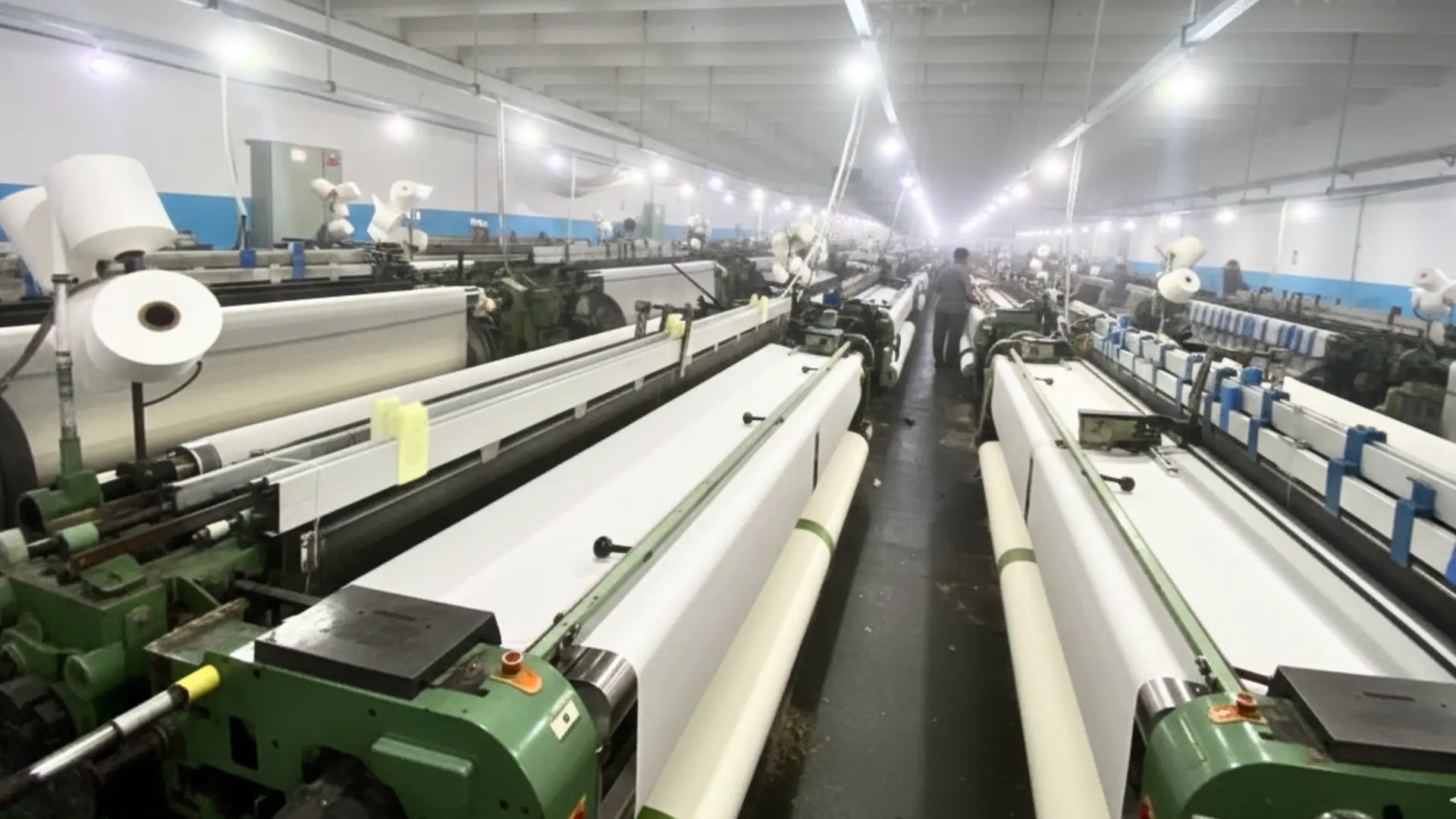
Weaving
Our weaving division runs modern Sulzer looms, producing tightly woven fabrics that combine strength with a smooth finish. From hospital bed linens to hotel-grade sheeting, every fabric is engineered for durability under repeated commercial washing.
Step 02
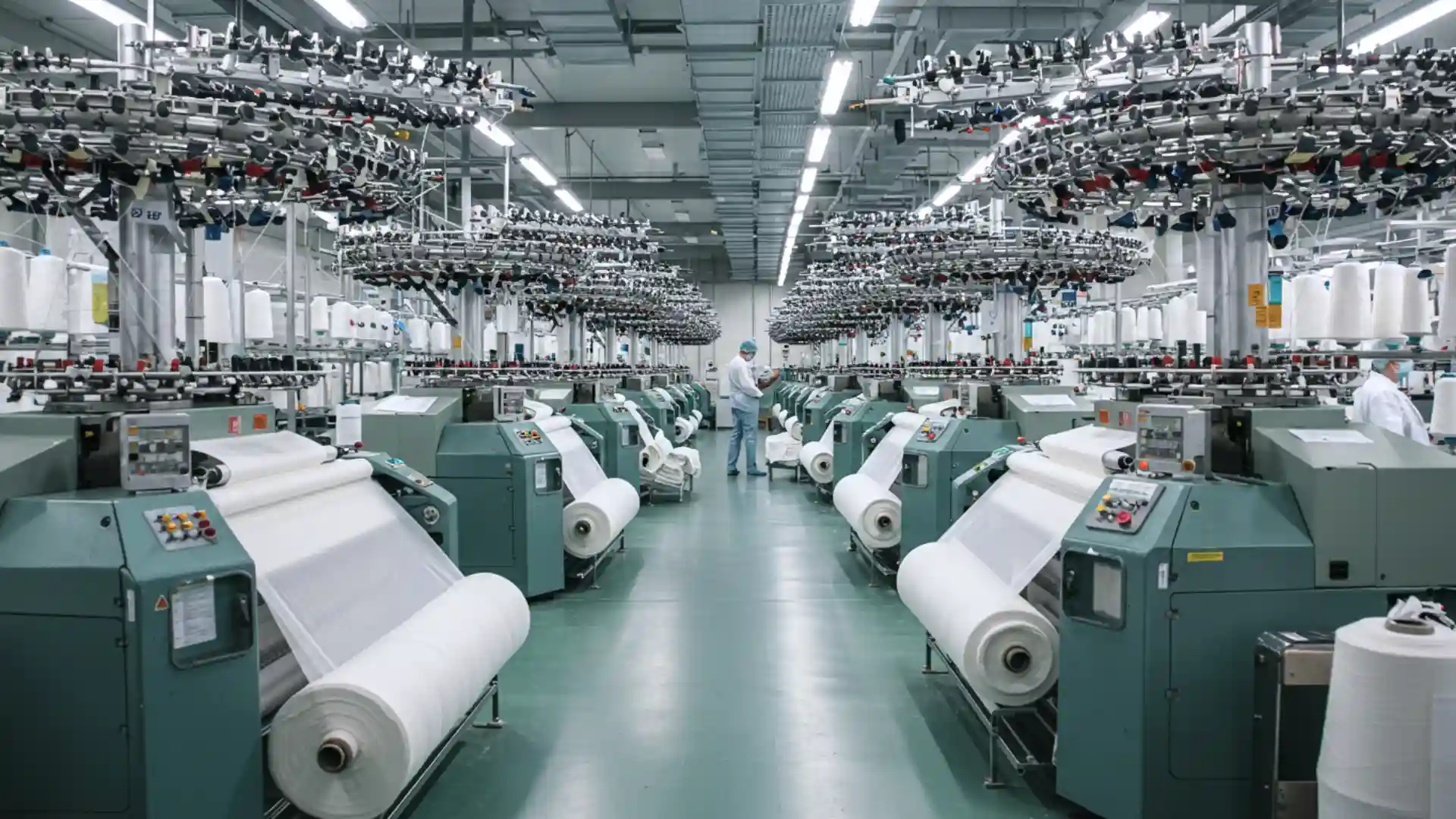
Knitting
Advanced knitting machines produce flexible, breathable, soft fabrics for specialised needs, especially hospital stretch-fitted sheets and apparel. Knitting gives the elasticity and comfort woven fabric cannot.
Step 03
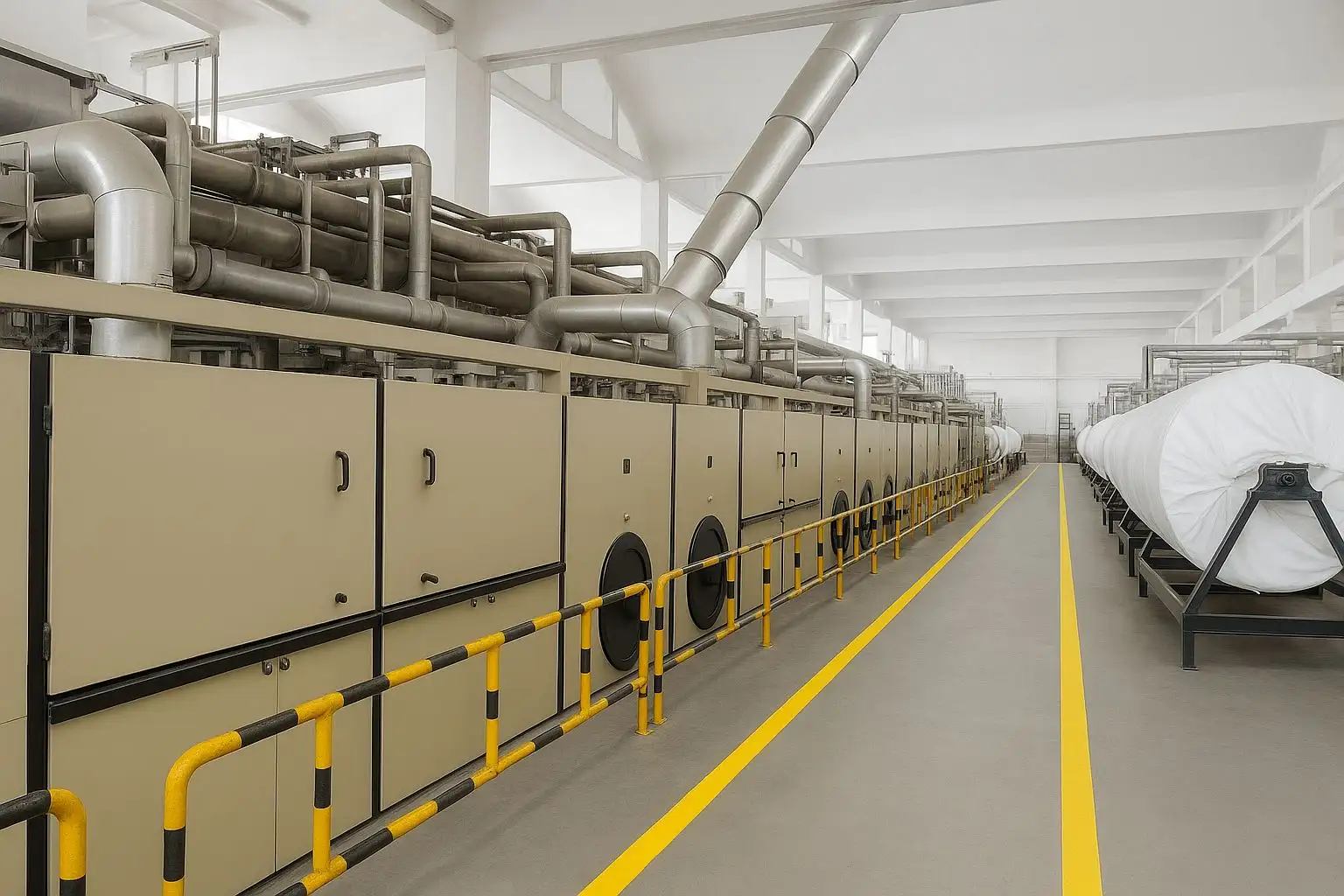
Processing
Quality is also in how fabric is treated. Our processing unit bleaches and finishes every lot so it is hygienic, bright and safe for institutional use, under an OEKO-TEX Standard 100 certified process.
- Washing: greige fabric is washed to remove impurities
- Drying: controlled drying keeps integrity and softness
- Singeing: surface fibres removed for a smoother hand
- Bleaching: consistent whiteness and purity for medical and hospitality use
Step 04
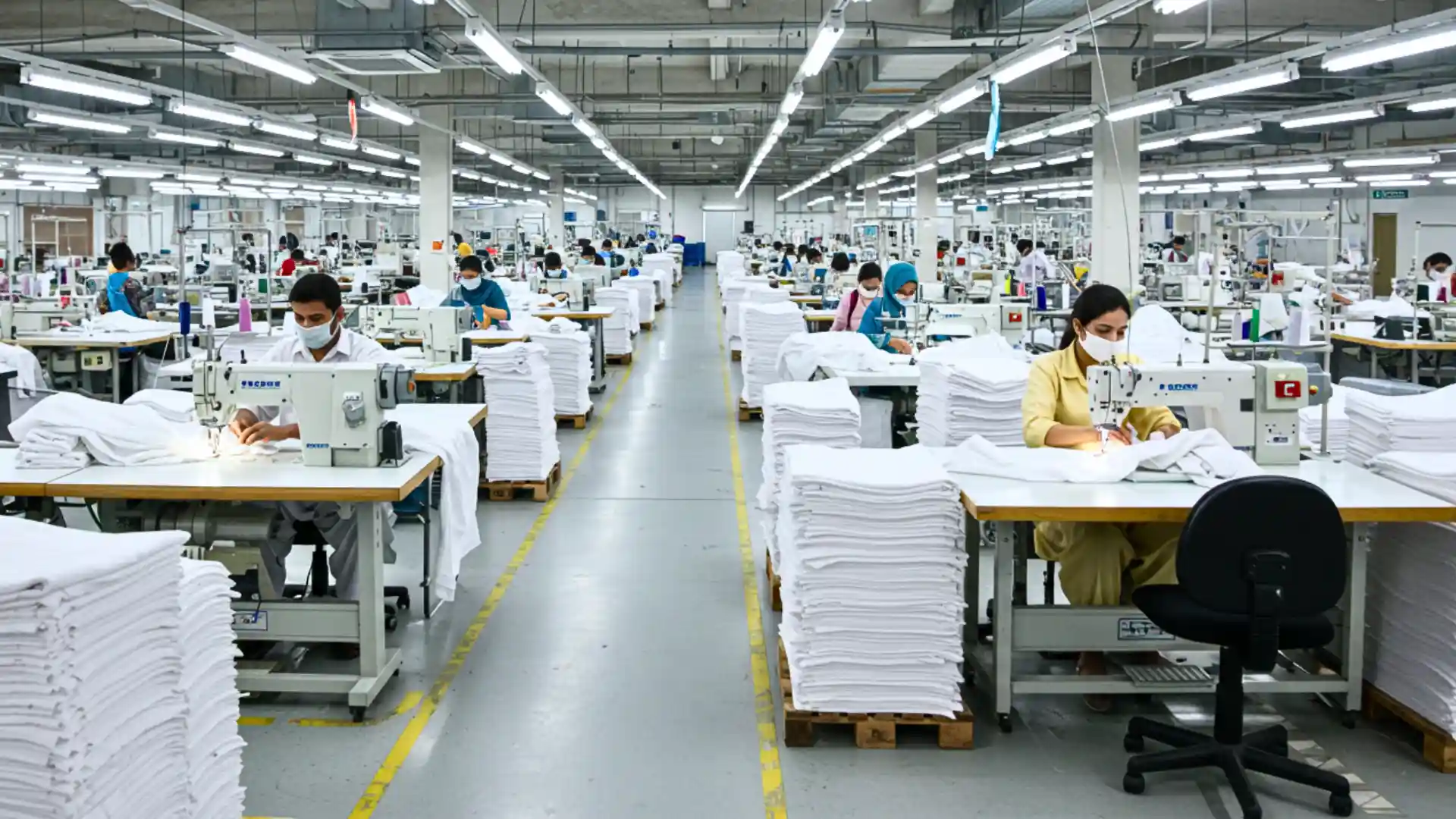
Stitching
Our stitching department brings everything together. Precision tailoring and strict in-line checks turn fabric into ready-to-use linens: bed sheets, blankets, gowns and restaurant textiles, each inspected before packing.
Also in-house
The steps around the core process
01
Yarn and greige warehouse
Incoming yarn and greige fabric checked against specification, lot numbers recorded for traceability.
02
Cutting
Precision cutting to your finished dimensions, including custom hospital bed and hotel mattress sizes.
03
Packing
Carton, bale or roll packing to your labelling requirement, with a documented container sealing procedure.
04
Shipping
40-foot high-cube containers on a monthly schedule, export documents issued for your market.
Capacity
Planned around monthly container schedules
Capacity is sized so repeat programs ship every month without gaps.
3M m
weaving capacity per month
4M m
bleaching and finishing per month
5M+
finished units exported per month
30
40′ HC containers per month
Manufacturing questions
What buyers ask about how we make linens
Where are International Linens products manufactured?
In Faisalabad, Pakistan, in two units run by International Linens: the Satiana Road site (yarn and greige warehouse, weaving, knitting, cutting, stitching, packing and export team) and the Khurrianwala unit (bleaching and finishing). Nothing in the core process is outsourced.
Does International Linens weave and knit its own fabric?
Yes. Woven greige for sheets, pillowcases and table linens is produced on our own Sulzer looms, and knitted fabric for stretch fitted sheets and apparel is produced by our knitting division. Both feed our own processing unit.
How are finished linens packed and shipped?
After final AQL inspection, goods are packed to the buyer’s carton, bale or roll specification with their labels, loaded into 40-foot high-cube containers under a documented sealing procedure, and shipped with export documents prepared for the destination market. Most volume goes to the United States.
Want to see the plant?
Send us your specification and we will quote it. Buyers and their inspectors are welcome at final inspection.